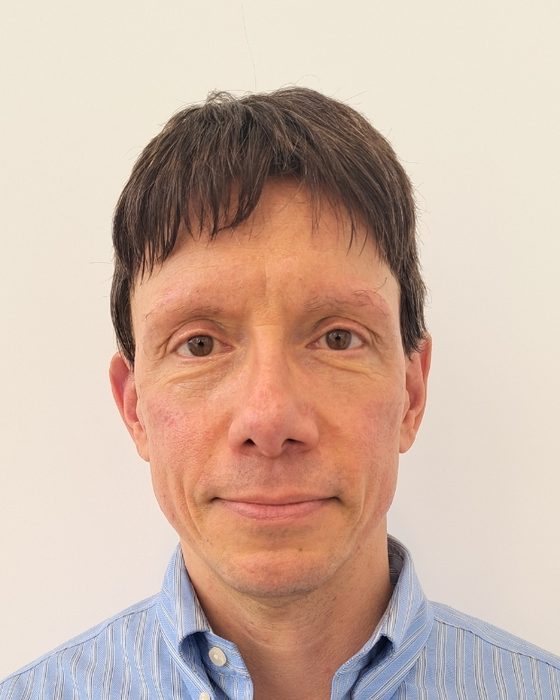
Steve Horvath
Professor of Medicine, Division of Geriatrics · Director of Aging Biology Research, Department of Medicine · David Geffen School of Medicine at UCLA
We study the biology of aging through epigenetic clocks: building biomarkers that measure biological age across tissues and species, and using them to test whether interventions can slow or reverse aging.
Dr. Steve Horvath is a geroscientist whose research bridges the fields of biomarkers, precision medicine, genomics, and comparative biology. He is Professor of Medicine and Director of Aging Biology Research in the Department of Medicine at the David Geffen School of Medicine, University of California, Los Angeles (UCLA). Widely recognized for his work on epigenetic aging clocks, Dr. Horvath developed the first multi-tissue epigenetic clock in 2013, which allows for the estimation of biological age across diverse human tissues. His research began with the first saliva-based epigenetic clock in 2011, continued with second-generation clocks for predicting mortality risk, and in 2023 produced the universal pan-mammalian clock: a single mathematical formula capable of measuring aging across all mammalian species. Beyond his academic research, Dr. Horvath founded the non-profit Epigenetic Clock Development Foundation. He has been named on Clarivate’s annual list of the world’s most influential scientific researchers every year since 2018.
Research
Interventions that restore a youthful epigenome
If the epigenome records age, the question that follows is whether a youthful state can be restored, safely and durably, in a living person. We are interested in interventions that restore youthful epigenetic state: gene therapies that act on the epigenome, and small molecules that act on the machinery which establishes and maintains epigenetic marks. We are as interested in the interventions that fail, and in understanding why they fail, as in the ones that work.
Causal epigenetic clocks: drivers, not passengers
Epigenetic clocks read chemical marks on DNA and estimate biological age with real accuracy. But accuracy is not mechanism. Most of the sites a clock reads are consequences of aging rather than causes of it, and a clock built on consequences can be moved without touching the biology underneath, so that the marker improves while the person does not. We build clocks whose constituent sites have passed a causal test, so that moving the clock means moving the biology.
Biological age as a measurement you can act on
A biomarker becomes useful only when it is reproducible enough that a change in it means something. Much of the published criticism of epigenetic clocks is really criticism of measurement precision, and some of it is fair. We work on the unglamorous half of the field: how reliably biological age can be measured, how large a change has to be before it can be distinguished from noise, and what it would take for a clinician, a trialist or a regulator to treat that change as evidence rather than as a suggestion.
Comparative and multi-omic readouts of aging
Aging is not written only in DNA methylation, and not only in humans. Species whose lifespans differ by orders of magnitude, among them mice, bats, whales and humans, share far more of their aging signature than anyone expected. We build measurements that hold across species, across tissues, and across molecular layers, on the reasoning that a signal surviving all three is much more likely to reflect something real about aging than one tuned to a single dataset.
Infection, immunity, and accelerated aging
Some people age faster than their birthdays suggest, and chronic viral infection is among the clearest reasons why. People living with HIV show accelerated epigenetic aging even when the virus is well controlled. That makes chronic infection both a window onto what actually drives biological aging and an unusually practical place to intervene, because the relevant drugs and vaccines are already approved, already inexpensive, and already taken by millions of people. We study how persistent viruses accelerate the epigenetic clock, and whether the treatments that control them, and the vaccines that prevent them, slow it back down.
Selected publications
Six papers that define the program. Full list →
News
The lab's work is supported by research grants and by gifts to UCLA. How to support it.